Barcelona
In Barcelona the ticket you booked eight weeks ago decides the trip
December in Barcelona runs a median $106 a night, and May is closer to $250. Check late February before you book anything, because Mobile World Congress week doubles every hotel in the city.
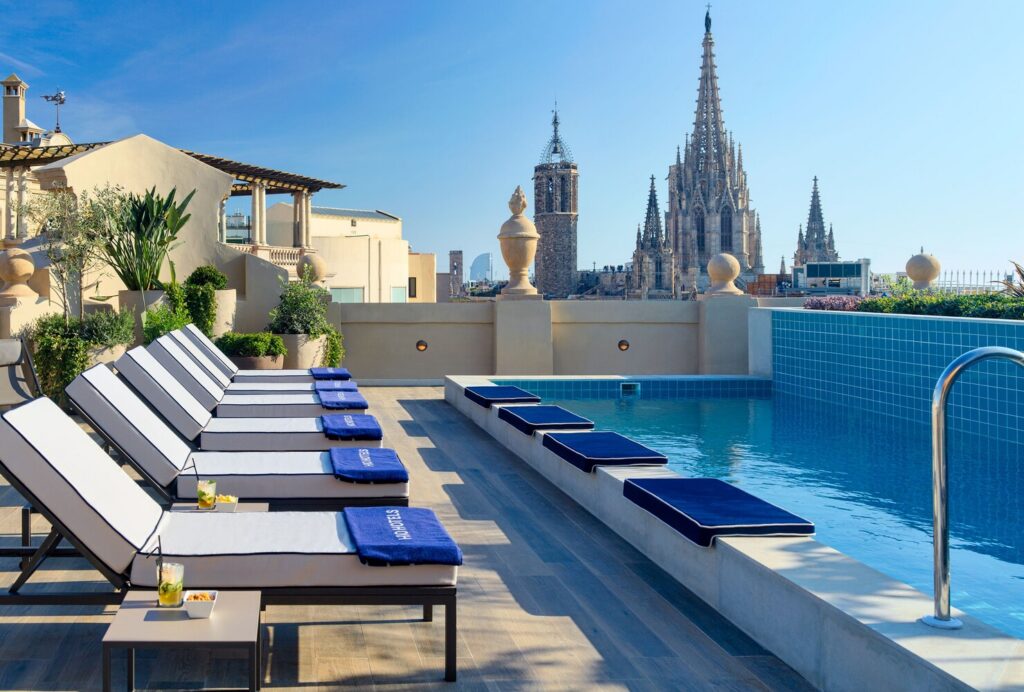
Sleep at Hotel Medinaceli, check prices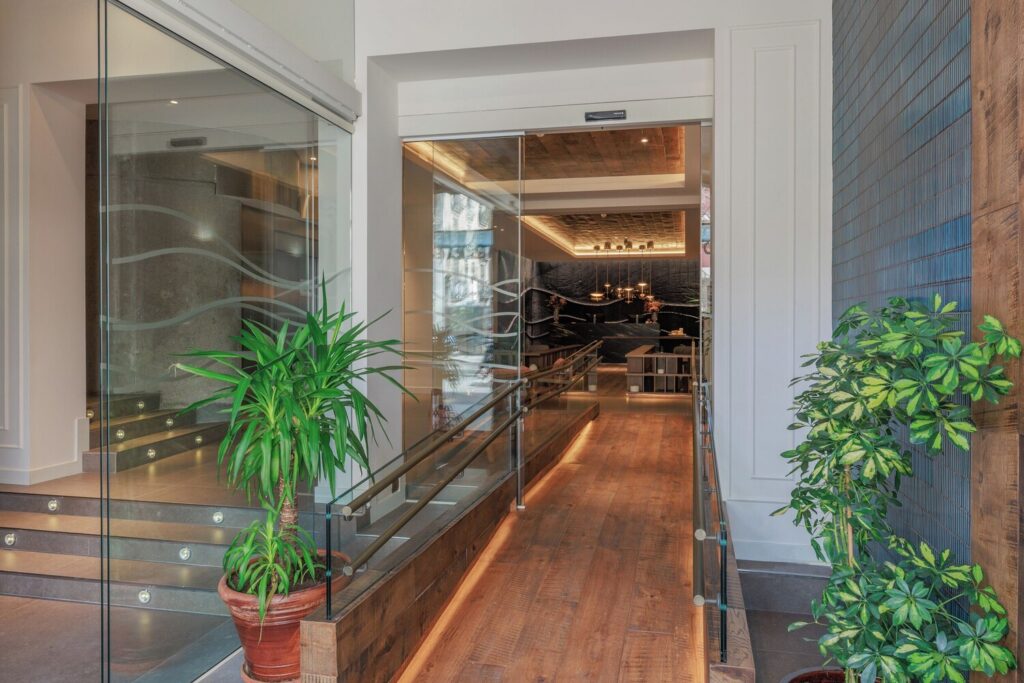 Hotel MedinaceliGothic Quarter$195 a night, midCheck prices , on a leafy square just off the bottom of Las Ramblas, near enough to walk the Gothic Quarter after six and far enough that the noise at three in the morning isn’t yours.
Lunch is the menu del dia, fixed price, roughly one until four, out of kitchens that charge far more for the same plate at nine. Book the Sagrada Familia and Park Guell before anything else. Both run timed slots, and Park Guell caps numbers and goes days ahead.
Quick facts
- Best time
- December, or anywhere from late October to January
- Days needed
- 5 days for the city, 7 with Montserrat and a day trip
- Stops
- 1 stop
- Cheapest month
- December · $106/night see costs
- Where to sleep
- Hotel Medinaceli, check pricesHotel MedinaceliGothic Quarter$195 a night, midCheck prices · $195 a night, mid
When to go and what it costs
Most of a mid-range Barcelona day is the bed, and the whole day comes to about $240 a person. December is cheapest at $106 a night, and May tops out at more than twice that. November splits the difference on price and weather, and the Sagrada Familia queue has gone by then. Tourist tax sits on top.
December is the pick at a $106 median, with afternoon highs around 15C (59F), no queue at the Sagrada Familia and Gaudi slots still open a week out. November is brighter and costs a little more, and the whole run from late October through January works.
March to June is the city at its best and its most expensive, topping out in May. Every timed ticket in Barcelona needs a month or more of notice in those months.
Skip August. The heat sits in the old town all afternoon and half the good kitchens are shut. Check the calendar for Mobile World Congress in late February too, because it doubles hotel rates across the whole city for a week.
| Month | Avg nightly hotel |
|---|---|
| January | $115 $80 below the annual average |
| Best value $115, and the Gaudi slots are still there a week out. Around 15C (59F) in the afternoon, cold once the sun goes, the odd shower. | |
| February | $148 $47 below the annual average |
| Check your dates before you book anything. Mobile World Congress in the last week doubles every hotel. Otherwise a bright $148 month at 15C (59F). | |
| March | $200 $5 above the annual average |
| Terraces refill and the median jumps to $200. Prices climb faster than the temperature does. Timed tickets start needing a month of notice. | |
| April | $222 $27 above the annual average |
| Peak Easter crowds, and Sant Jordi on the 23rd puts books and roses on every street. Some rain, a $222 median. Book Gaudi and Picasso the moment you have flights. | |
| May | $252 $57 above the annual average |
| Peak The most expensive real month at $252, and it buys the best weather of the year. Primavera Sound closes it out and moves the prices again. | |
| June | $243 $48 above the annual average |
| Peak Long evenings, and the sea finally warm enough to swim at 26C (79F). Sant Joan on the 23rd is fireworks on every beach all night. | |
| July | $224 $29 above the annual average |
| Peak Hot and humid at 29C (84F), $224. Beach in the morning, because the old town is unpleasant from midday on. | |
| August | $215 $20 above the annual average |
| Peak Airless at night and 31C (88F) in the day. Locals leave, the good kitchens shut for the month, and the median only drops to $215. | |
| September | $249 $54 above the annual average |
| Peak La Merce lands in week three, and the streets fill with castellers and correfoc. The $249 median sits twelve months out, so read it as directional. | |
| October | $225 $30 above the annual average |
| Best value Crowds thin and the sea stays swimmable to mid-month. 22C (72F). The $225 median is high early, then drops hard toward November. | |
| November | $144 $51 below the annual average |
| Best value A sharp drop to $144, bright with some rain. No queue at the Sagrada Familia, and the Gaudi slots loosen right up. | |
| December | $106 $89 below the annual average |
| Best value Christmas markets, cold evenings, 15C (59F) days. $106 is the cheapest month of the year, less than half of May. Daylight is short. | |
Hamsa House
Check prices for Hamsa HouseLeonardo Royal Hotel Barcelona Fira
Check prices for Leonardo Royal Hotel Barcelona FiraCasa Mathilda
Check prices for Casa MathildaHotel Medinaceli
Check prices for Hotel MedinaceliCasa Pince
Check prices for Casa PinceH10 Madison
Check prices for H10 MadisonH10 Casa Mimosa
Check prices for H10 Casa MimosaHotel Casa Sagnier
Check prices for Hotel Casa SagnierMonument Hotel
Check prices for Monument HotelOhla Barcelona
Check prices for Ohla Barcelona
below average above average
What a day costs
Around $105 a day gets a hostel bed or a cheap pension, the menu del dia at lunch and the free half of the city, the beaches, the Bunkers and the wooded part of Park Guell. About $240 buys half a well-rated Eixample double and both Gaudi tickets. Double that for a rooftop pool. Tourist tax comes on top.
Shoestring
$105/day
A hostel bed or small pension outside the Gothic Quarter, a menu del dia lunch at EUR 12 to 16, and a T-casual metro card shared between you. The free half of the city carries the rest, meaning the beaches, Bunkers del Carmel, Santa Maria del Mar and Park Guell’s wooded zone. Tourist tax is extra.
5-day trip · $525
Mid-range Most readers
$240/day
Half a 9-plus rated double in the Eixample or Gothic Quarter, tapas you didn’t queue for, a T-casual card, and both Gaudi tickets booked in advance rather than chanced at the gate. The bed is about $150 of that. Tourist tax sits on top, every night, and the hotel takes it at checkout.
5-day trip · $1,200
Comfort
$480/day
A rooftop pool on Passeig de Gracia or facing the cathedral, a tasting menu or a booked cooking class, taxis instead of the last metro, and the small-group tours that hold your Sagrada Familia and Montserrat slots for you. Tourist tax lands at the top of its band at this rate.
5-day trip · $2,400
| Shoestring | Mid-range Most readers | Comfort | |
|---|---|---|---|
| Per day | $105/day | $240/day | $480/day |
| Includes | A hostel bed or small pension outside the Gothic Quarter, a menu del dia lunch at EUR 12 to 16, and a T-casual metro card shared between you. The free half of the city carries the rest, meaning the beaches, Bunkers del Carmel, Santa Maria del Mar and Park Guell’s wooded zone. Tourist tax is extra. | Half a 9-plus rated double in the Eixample or Gothic Quarter, tapas you didn’t queue for, a T-casual card, and both Gaudi tickets booked in advance rather than chanced at the gate. The bed is about $150 of that. Tourist tax sits on top, every night, and the hotel takes it at checkout. | A rooftop pool on Passeig de Gracia or facing the cathedral, a tasting menu or a booked cooking class, taxis instead of the last metro, and the small-group tours that hold your Sagrada Familia and Montserrat slots for you. Tourist tax lands at the top of its band at this rate. |
| 5-day trip | $525 | $1,200 | $2,400 |
What will your trip cost?
- Shoestring $105 a day · 3 nights $315
- Mid-range $240 a day · 3 nights $720
- Comfort $480 a day · 3 nights $1,440
Beds, food and local transport for one person. Flights and anything you book on the day are not in it.
How long do you have?
Five days is the number for a first visit. That puts the Sagrada Familia and Park Guell on separate mornings, leaves the old city for the evenings, and still fits a beach-and-Montjuic split day. Stretch to seven if you want Montserrat plus a run to Girona or Sitges. Two days works but means stacking the Gaudi tickets back to back.
2 days · Gaudi and the old town
- Day 1, earliest Sagrada Familia slot, then Passeig de Gracia and Casa Batllo, menu del dia at two.
- Day 1 evening, Gothic Quarter after six, flamenco at eight from $34, tapas standing at ten.
- Day 2, Park Guell on a booked slot at $31, Gracia for lunch, El Born and Santa Maria del Mar before the flight.
4 days · The city, properly
- Days 1 to 2 as above, unhurried, with Casa Mila from the pavement and an afternoon off.
- Day 3, split day, Barceloneta and Nova Icaria before noon, Montjuic funicular and the Miro after.
- Day 4, Picasso Museum in its last two hours, El Born, rooftop paella class at $81 for dinner.
6 days · City plus the mountain
- Days 1 to 4 as above, with both Gaudi tickets on their own mornings rather than back to back.
- Day 5, Montserrat by cogwheel railway at $78 with the winery stop, back for a late lunch.
- Day 6, the Bunkers del Carmel at dusk, a food tour at $74, and a last night in the emptied Gothic Quarter.
8 days · Barcelona and Catalonia
- Days 1 to 6 as above, including Montserrat and one full day with nothing booked.
- Day 7, Girona, Besalu and Pals on the medieval villages tour at $115, or the R2 Sud to Sitges for a beach day.
- Day 8, a neighbourhood market, the cathedral cloister, an early lunch, and the Aerobus out.
Suggested itinerary
Day one is arrival, and the Gothic Quarter only after six, once the coach groups have gone. Day two is the earliest Sagrada Familia slot and then Passeig de Gracia. Day three is Park Guell and lunch up in Gracia. Later days pair beach mornings with Montjuic afternoons, then Montserrat, El Born, and either the medieval villages or Sitges.
Day 1 · Land and let the quarter empty out
From El Prat the R2 Nord train reaches Passeig de Gracia in about 25 minutes and your T-casual card covers it. The L9 Sud metro is quick but needs its own airport ticket, which a T-casual won’t pay for.
Check in, then do nothing until six. The Gothic Quarter between ten and six belongs to cruise groups and coach trips off the coast. By seven the lanes around Placa del Pi and Carrer dels Banys Nous are quiet enough to hear your own footsteps.
Vermut at eight for about EUR 3, tapas standing at ten, bed late, and you’re on Barcelona hours from the first night.
Day 2 · Sagrada Familia at first light then the Eixample
Book the earliest entry slot, weeks out. The east facade windows throw blue and green across the nave for the first two hours and are washed flat by noon, so the first slot is worth more than any tier of ticket.
Ninety minutes inside is enough. Walk down to Passeig de Gracia, where Casa Batllo and Casa Mila stand ten minutes apart and cost nothing from the pavement, so pay to go inside one only, and make it Batllo.
Lunch is the menu del dia between one and four, three courses with wine for EUR 12 to 16. Flamenco at eight from $34, then tapas.
Day 3 · Park Guell on a timed slot then Gracia
The Monumental Zone is capacity capped and gone days ahead from March to October. A guided hour runs $31. Ride the outdoor escalators up from Lesseps rather than walking the hill.
The mosaic terrace is the photograph, but the free wooded park above it is where you should sit for an hour. Then walk downhill into Gracia, which has small shops, no coach parking and a run of squares, Placa del Sol, Placa de la Virreina and Placa de la Vila.
Eat there rather than coming back into the centre. Dinner costs less and it’s fifteen minutes on the metro home.
Day 4 · Beach before noon and Montjuic after
Barceloneta is at its best before eleven and unbearable by two from June to September. Walk out along the sand to Nova Icaria, where the people who live here actually swim, then take the L4 back for a late lunch.
In the afternoon ride the funicular from Paral-lel up Montjuic for the Miro Foundation, the castle and the whole port laid out beneath you. Come down at dusk.
Day 5 · Montserrat and back for a late lunch
The cogwheel railway trip runs $78 with a winery stop on the way back and is rated 9.8. The five-hour small-group version at $110 returns you to the city by early afternoon, which the six-hour one doesn’t.
Either way you’re on a mountain by nine and out of Barcelona during its worst hours. Back down, work the Boqueria’s back stalls rather than the row facing the Ramblas, then Santa Maria del Mar in El Born, free, and the finest Catalan Gothic interior in the city, all height and no clutter.
Day 6 · El Born and the evening you pre-booked
The Picasso Museum wants a timed ticket too and is quietest in its last two opening hours, which is the opposite of what most itineraries tell you. Spend the morning slowly on Passeig del Born and Carrer de Montcada.
Then use the evening you booked before you flew. That is either the rooftop paella class at $81, which is dinner as well as an activity, or the three-hour local food tour at $74.
Finish at the Bunkers del Carmel, a stiff twenty-minute climb to an old anti-aircraft battery, free, with the entire lit city underneath you.
Day 7 · Medieval villages or a train down to Sitges
The ten-and-a-half-hour medieval villages tour at $115 is rated 9.6 and earns its length on a grey day.
If the forecast is good instead, take the R2 Sud down to Sitges in about forty minutes for a beach that has nothing to do with the city, and be back by eight.
Save the last night for the Gothic Quarter after dark, the same lanes you walked jetlagged on day one.
Day 8 · Fly home without wasting the morning
Most Barcelona flights leave in the afternoon, so use the hours. Leave the bags with the hotel, buy fruit and jamon at a neighbourhood market rather than the Boqueria, and walk one thing you skipped, the cathedral cloister with its thirteen geese or Sant Pau del Camp.
Eat an early lunch at one, which for once is the correct Spanish time. The Aerobus from Placa Catalunya takes about 35 minutes and runs constantly. The R2 Nord is cheaper on a T-casual but leaves you a long walk at Terminal 2.
Build your days
Everything in the Barcelona research, grouped by the part of the day it suits.
Morning
- Park Guell Skip-the-Line Guided Tour
- Sagrada Familia & Barcelona Small Group Tour with Hotel Pick-up
- Barcelona Highlights Small Group Tour with Hotel Pick Up
Evening
- Barcelona: Rooftop Paella Cooking Class with Sangria
- No Diet Club – Local Food Tour in Barcelona
- Flamenco Show Ticket at Theatre Barcelona City Hall
- The Premium Experience at Teatro Flamenco Barcelona
- Barcelona: Los Tarantos Flamenco Show
- Top Awarded Flamenco Show: Tablao Cordobes
- Flamenco Night at Tablao de Carmen with Dinner
Whole day
- Barcelona in 1 Day: Sagrada Familia, Park Guell & Old Town with Pickup
- Barcelona All Included: Sagrada, Park Guell, Montjuic & Gothic Quarter
Day trip
- Montserrat Tour with Cogwheel Train + Wine Tasting
- Montserrat Monastery Small Group Tour with Hotel Pick-up
- Small-Group Medieval Villages Full-Day Tour
- 3 Countries in 1 Day: Spain, France & Andorra
Where to stay
Sleep in the Gothic Quarter or the Eixample. The old town suits short trips with no transit at all, and the rooftop pools there make July bearable. The Eixample near the Sagrada Familia turns that early slot into a walk and sleeps quieter. Sant Gervasi is uptown and calm. Fira holds its rate when the centre spikes.
Gothic Quarter
Hamsa House
Carrer Nou de Zurbano 4
$154 a night, the cheapest bed here
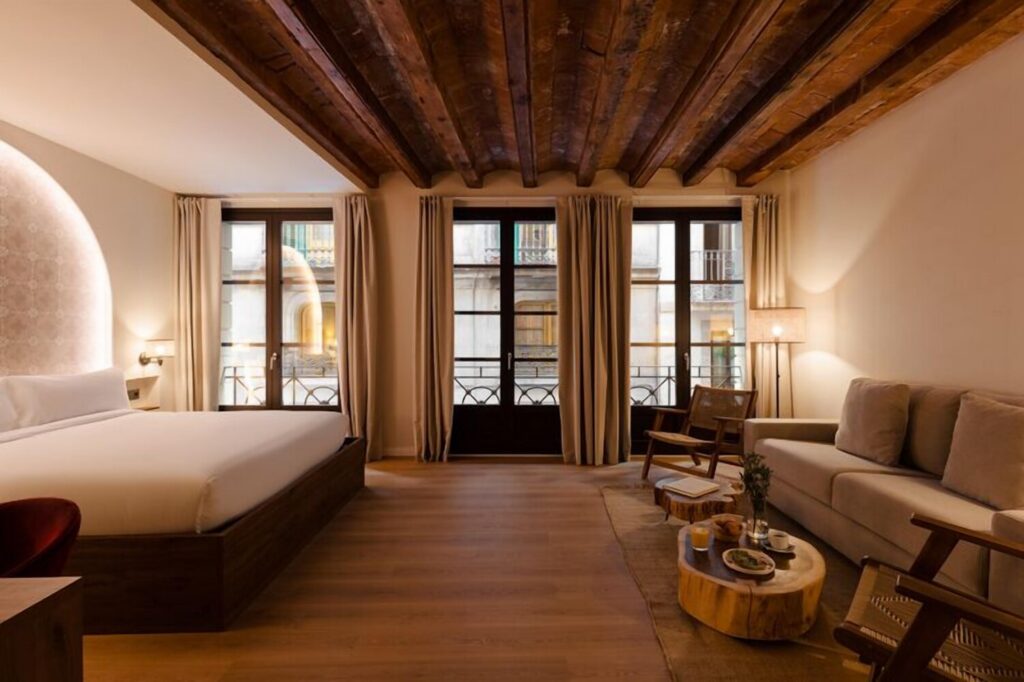
The cheapest 9.4-rated room actually inside the Gothic Quarter, with wooden beams and a converted old-town building around it. You step out into the alleys rather than onto a main road, which is worth paying for if the quarter after dark is why you came. Only 191 reviews, so less of a track record than the big names.
Fira and Sants
Leonardo Royal Hotel Barcelona Fira
Carrer dels Alts Forns 40
$183 a night, mid
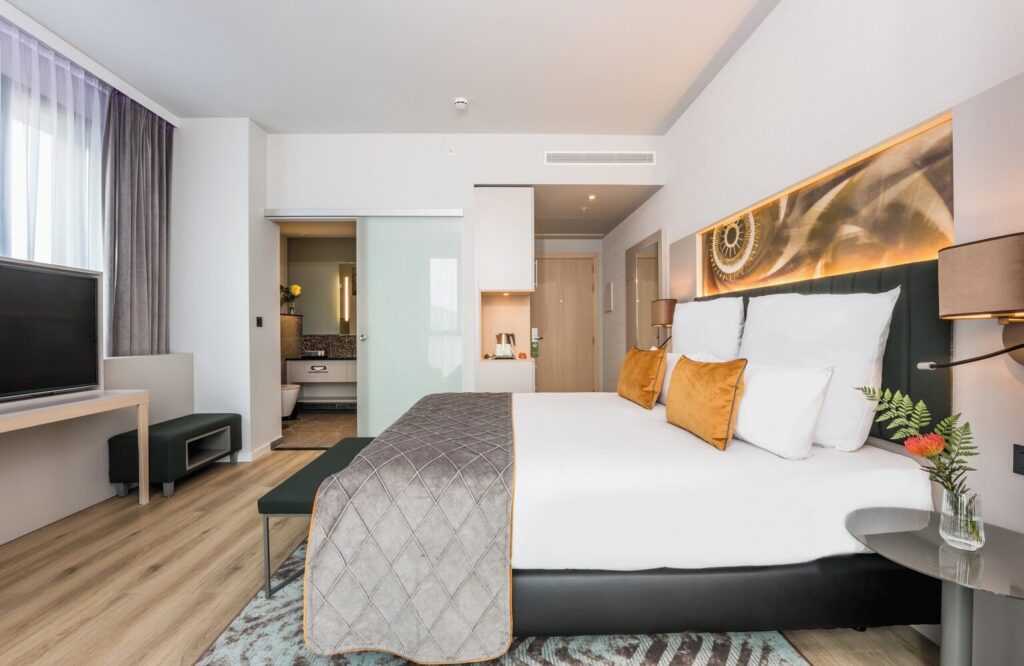
1,304 reviews and the largest room count on this page. That is how it holds its rate in the weeks the centre spikes. Metro to Placa Espanya in minutes, and walking distance to Sants for the Montserrat and Sitges trains. The area itself is business district, so eat elsewhere.
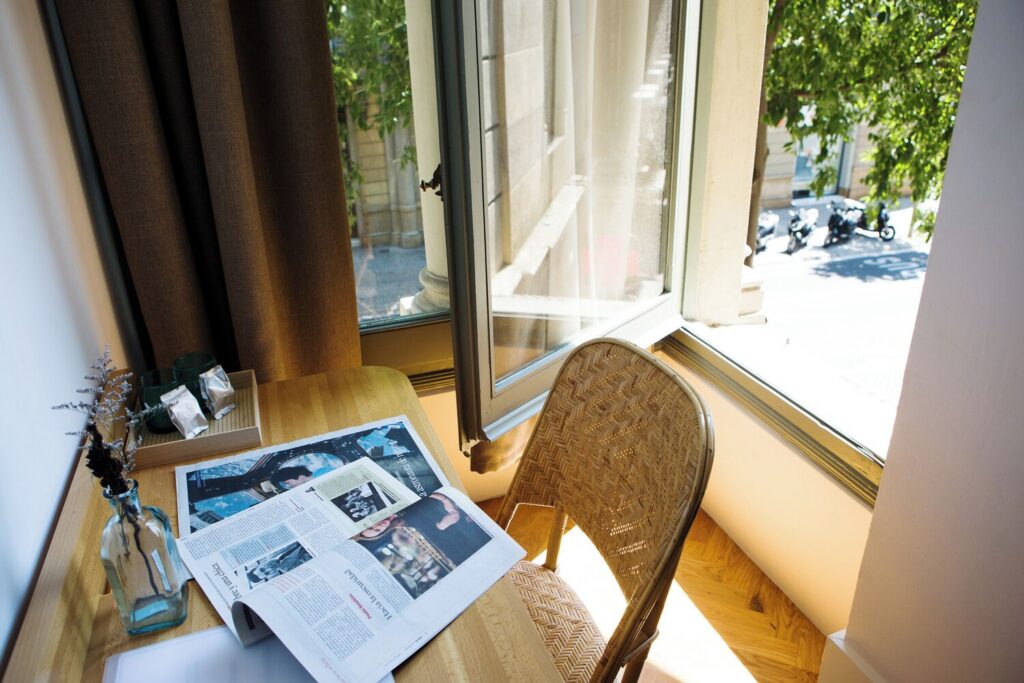
Eixample
Casa Mathilda
Carrer de Roger de Lluria 125
$186 a night, mid
A small guesthouse in the Eixample grid, ten minutes on foot from the Sagrada Familia, so that first-slot morning is a walk rather than a metro scramble. Quieter nights than the old town gives you. Front desk hours are limited, because it’s a guesthouse rather than a hotel.
Gothic Quarter
Hotel Medinaceli
Plaça del Duc de Medinaceli 8
$195 a night, mid
9.6 from 819 reviews on a leafy square just off the bottom of Las Ramblas, so you get the location without the Ramblas noise at three in the morning. The after-six walks through the quarter start at the front door. Rooms facing the square are worth asking for.
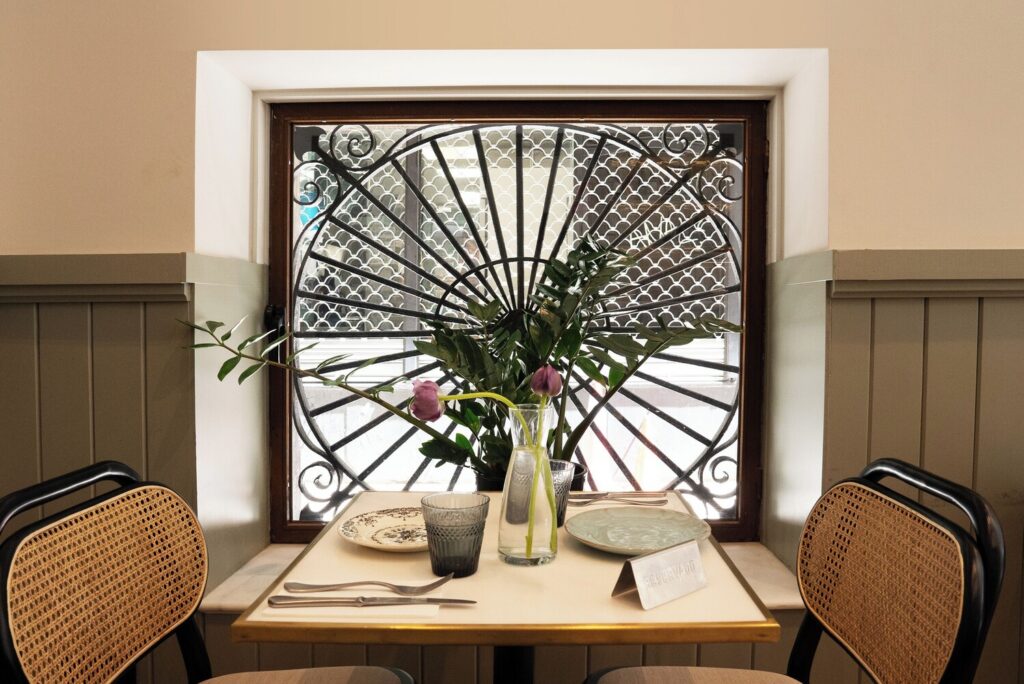
Gothic Quarter
Casa Pince
Carrer d'en Rauric 10
$218 a night, upper mid
A recent conversion that has already banked 931 reviews at 9.4, and breakfast is included. In the Gothic Quarter that usually means paying extra somewhere on a side street. Good for late risers who want to be out at nine rather than eight. Being new, it has fewer long-run reviews than the old names.
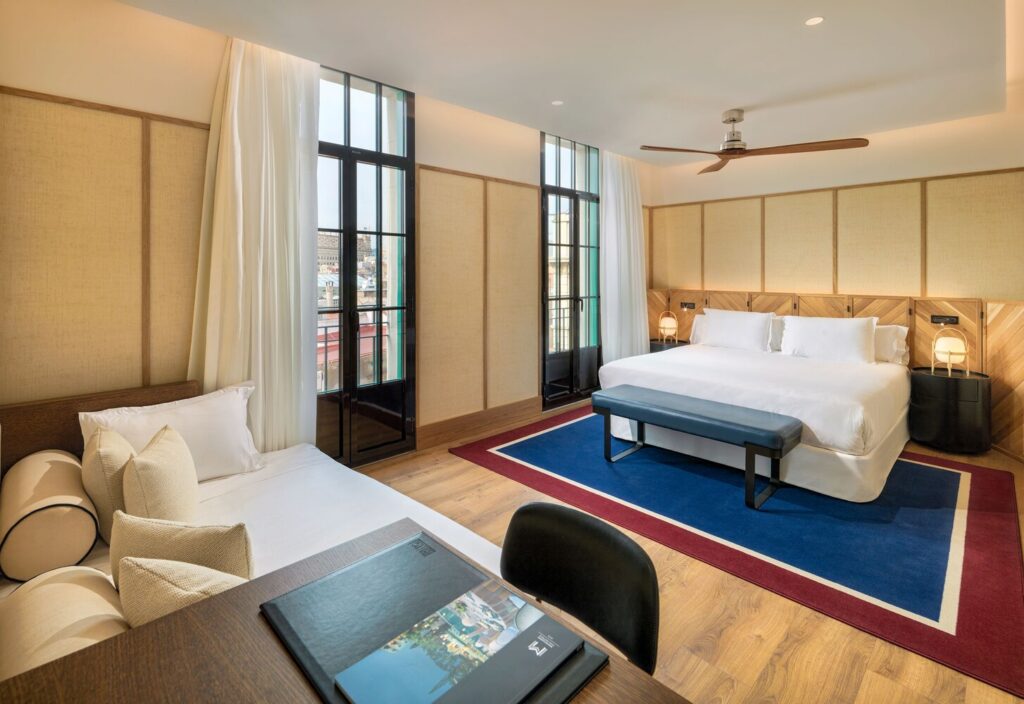
Gothic Quarter
H10 Madison
$311 a night, upper
A rooftop pool looking straight at the cathedral, 1,079 reviews at 9.6, and the reliable upper-tier choice in the old town. The pool is what makes a July or August trip survivable. Swim at three, walk the quarter at seven. Rooms are old-town small.
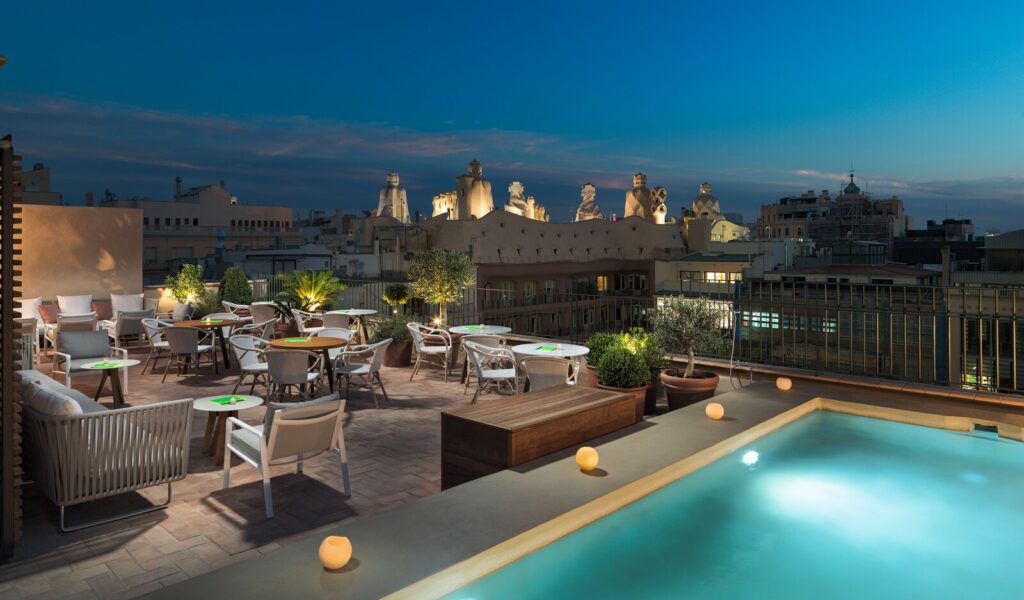
Eixample, near Casa Mila
H10 Casa Mimosa
Carrer de Pau Claris 179
$323 a night, upper
9.8 from 862 reviews at $323, the highest-rated property in this whole set. Rooftop pool, a garden, and Gaudi’s Casa Mila around the corner. If you’re doing Passeig de Gracia on foot, this removes every transit leg from the Gaudi days. You pay a clear premium for the address.
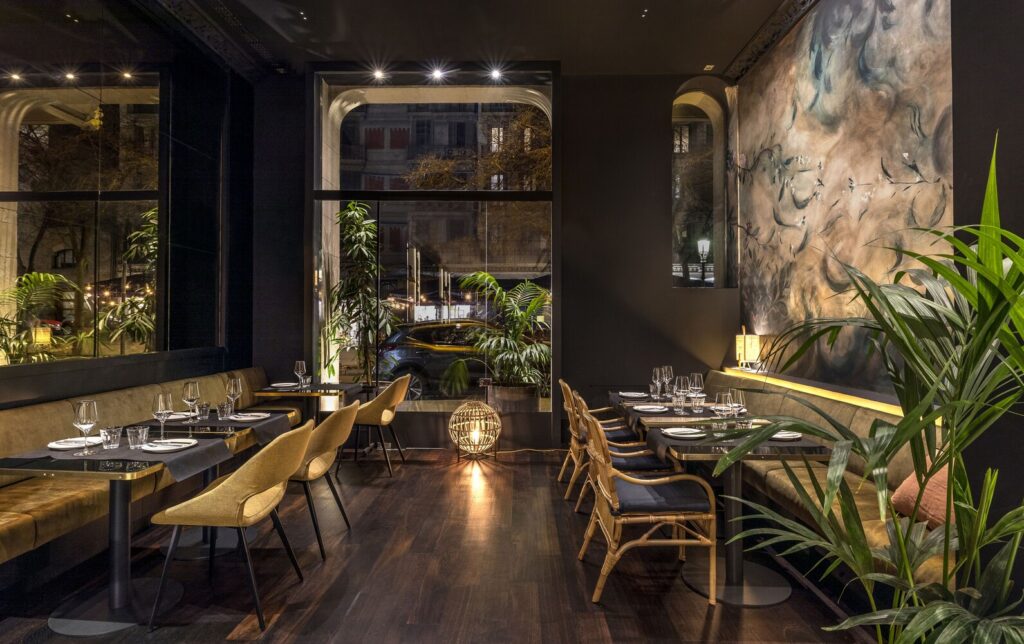
Sant Gervasi
Hotel Casa Sagnier
Rambla de Catalunya 104
$379 a night, upper
Uptown and quiet, in a modernista building above the tourist line. Where you sleep once you’ve decided the Gothic Quarter is a place you visit rather than live in. Twenty minutes back from the old town at night, so budget the taxi or plan the metro.
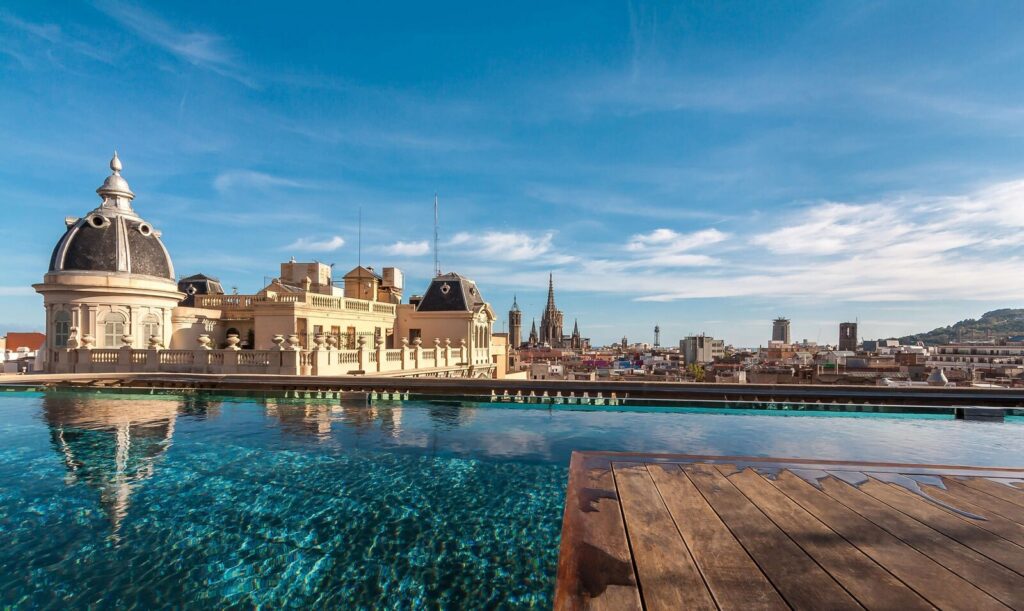
Gothic Quarter
Ohla Barcelona
$441 a night, luxury
A rooftop pool facing the Palau de la Musica, a Michelin restaurant downstairs and a thousand reviews at 9.6. At $441 it’s the top of the old-town market, easiest to justify on a short trip where you want no transit. The tourist tax lands at the top of its band at this rate, and you pay it at checkout.
Where should you sleep?
Which area suits you comes down to what you’re paying for a room and how late you’re out.
Every place we track, by area
Gothic Quarter
- Hotel Medinacelimid-priced
- H10 Madisonupper-end
- Ohla Barcelonaluxury
- Hamsa Housemid-priced
- Casa Pincemid-priced
Eixample, near Casa Mila
- H10 Casa Mimosaupper-end
Sant Gervasi
- Hotel Casa Sagnierupper-end
Passeig de Gracia
- Monument Hotelluxury
Eixample
- Casa Mathildamid-priced
Fira / Sants
- Leonardo Royal Hotel Barcelona Firamid-priced
What to do
Book the timed Gaudi entries before anything else. A guided Park Guell hour is $31, and a small-group Sagrada Familia tour holds a slot when the direct ones have gone. Flamenco is about $35 for an hour in a cellar off Placa Reial. Montserrat by cogwheel train with a winery stop is $78. The rooftop paella class doubles as dinner.
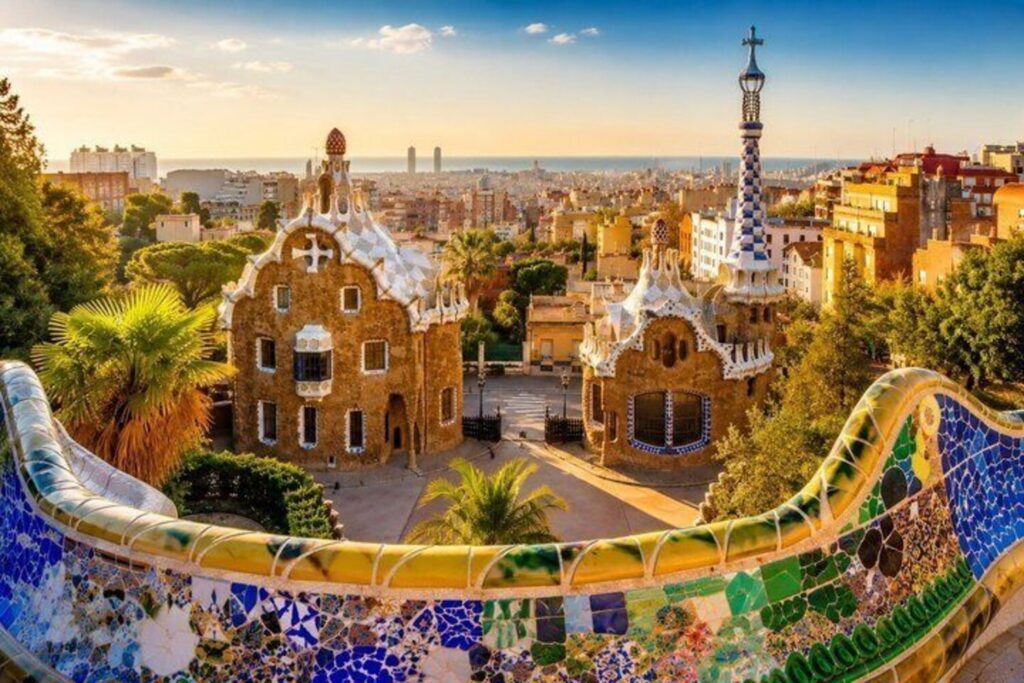
Park Guell Skip-the-Line Guided Tour
$31 for an hour, 3,042 reviews. The Monumental Zone is capacity capped and sells out days ahead from March to October. This is the ticket people get wrong more than any other. Turn up without a slot and you look at the mosaic terrace through a fence.

Sagrada Familia & Barcelona Small Group Tour with Hotel Pick-up
$123 for five hours in a small group, with the Sagrada Familia interior included. That interior is the half everyone underestimates. Worth it on a first trip, because the guide holds a fixed slot and you aren’t gambling on the release calendar.
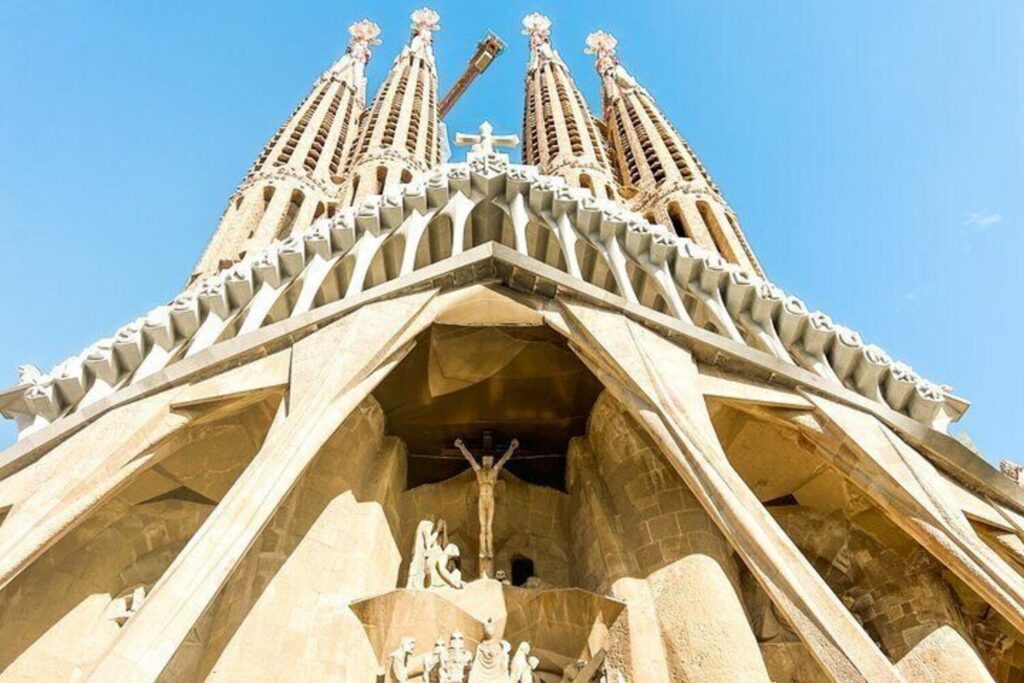
Barcelona All Included: Sagrada, Park Guell, Montjuic & Gothic Quarter
$103 for seven hours, rated 9.6, and it bundles the two timed Gaudi tickets with Montjuic and the old town. Cheaper and better rated than the $116 one-day tour that sells more seats. Take it on day one if you booked late and the individual slots have gone.
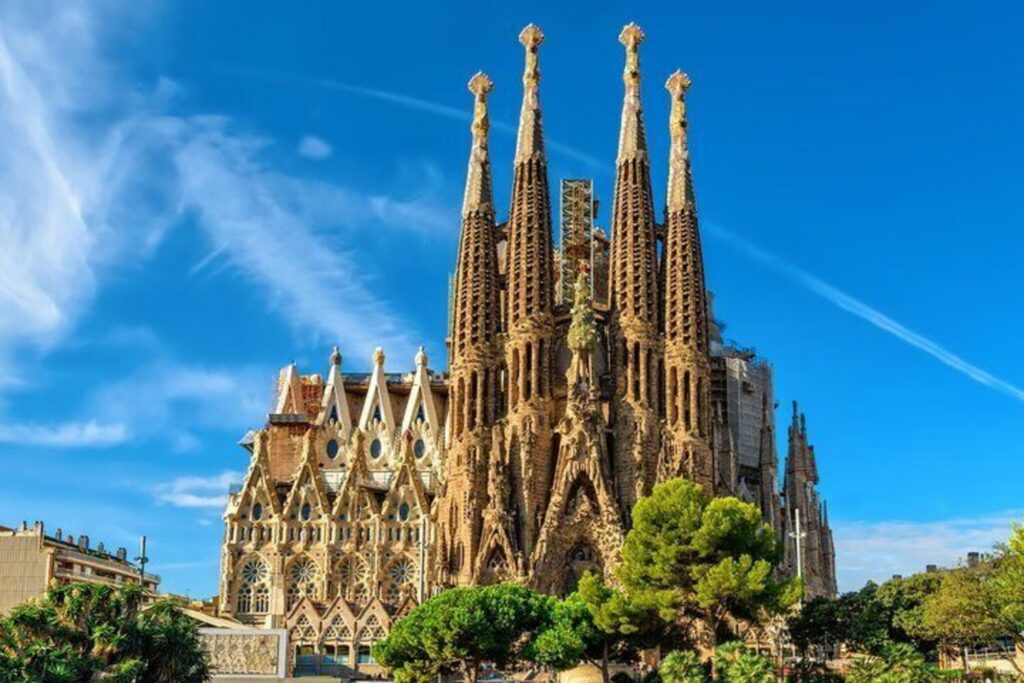
Barcelona Highlights Small Group Tour with Hotel Pick Up
The cheapest small-group orientation at $92 for five hours. Good as a first morning if you’d rather get the geography straight and then walk the city yourself for the rest of the week. It doesn’t include the Sagrada Familia interior, so book that separately.
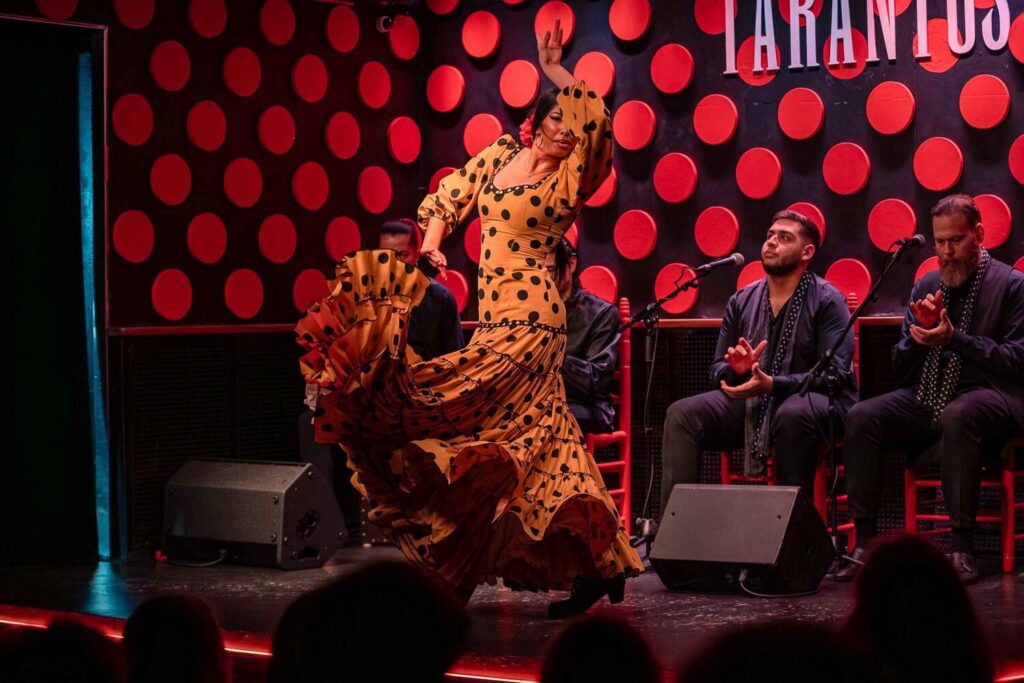
Barcelona: Los Tarantos Flamenco Show
Forty minutes in a small cellar on Placa Reial for $35, 970 reviews. Short and loud, and the room beats the bigger tablaos for atmosphere. Book the early show and you’re back out into the emptied Gothic Quarter in time for tapas at nine.

The Premium Experience at Teatro Flamenco Barcelona
Rated 9.8 for $34 and one hour, the best rating-to-price ratio of any evening in this data. Flamenco is Andalusian rather than Catalan, but the Barcelona tablaos are good and cheap, and an hour fits neatly before a late dinner.

No Diet Club – Local Food Tour in Barcelona
Three hours and $74 in the places locals actually eat, well away from the Ramblas menu-del-dia traps. Book it for the second or third night, once you can place the neighbourhoods, then work through the rest of them yourself.
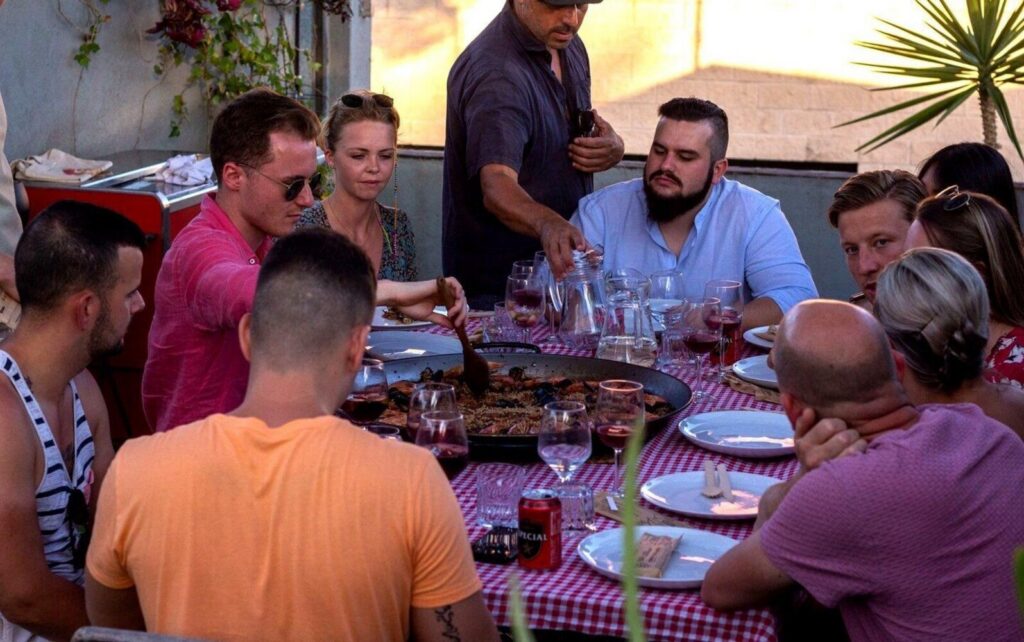
Barcelona: Rooftop Paella Cooking Class with Sangria
$81, two and a half hours, rated 9.8, and you eat the paella you cooked on a rooftop. It doubles as dinner, so the real marginal cost is nearer $50. Hold a rainy evening for it, and book before you fly, because 25 reviews means small classes that fill.
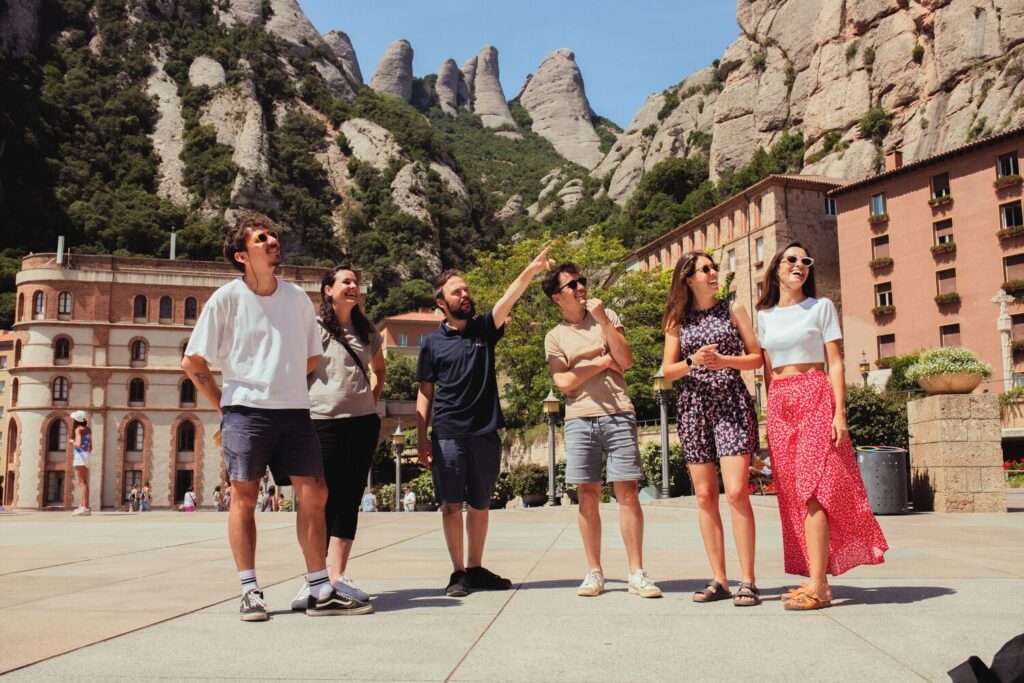
Montserrat Tour with Cogwheel Train + Wine Tasting
9.8 rated at $78, including the cogwheel railway up the mountain and a winery on the way back. Nothing else in the data rates that high at that price. It also gets you out of the city during the hours the old town is worst.
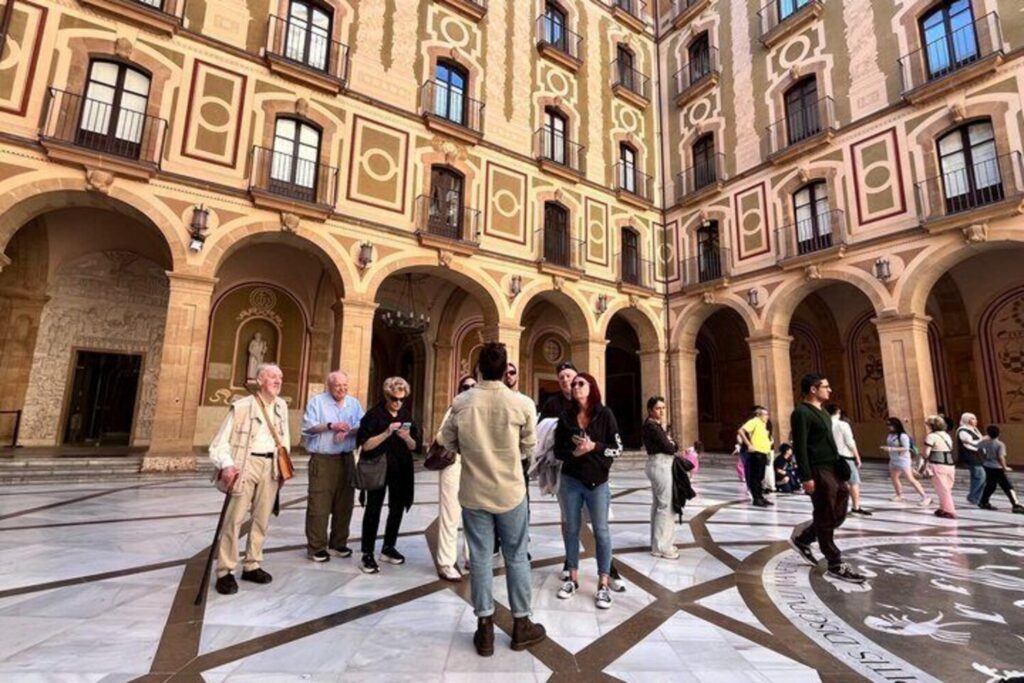
Montserrat Monastery Small Group Tour with Hotel Pick-up
$110 for five hours and 1,835 reviews. The half-day version, so you’re back in Barcelona for a late lunch, which the six-hour tour doesn’t allow. Take this one if you’re pairing Montserrat with a beach afternoon or an evening booking.
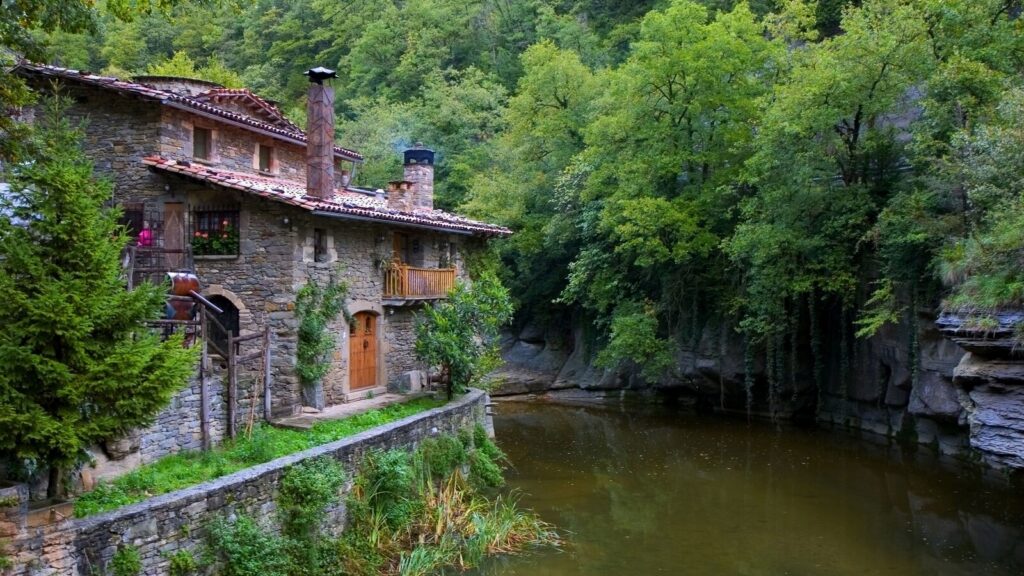
Small-Group Medieval Villages Full-Day Tour
Girona, Besalu and Pals in one ten-and-a-half-hour loop, rated 9.6 at $115. The second day trip once Montserrat is done, and the right call on a grey day when the beach half of your split day is off the table.
Eat here
Barcelona is in Catalonia, and Catalan cooking is its own tradition rather than the sangria-and-paella package sold on La Rambla. It’s a mountain-and-sea kitchen built on salt cod, grilled and cold vegetables, snails, pork sausage with white beans, and rice or noodle dishes cooked flat in a pan. Four mother sauces do most of the work. Sofregit, picada, samfaina, allioli. Much of it is seasonal and tied to the calendar, so what’s worth eating depends on the month you arrive.
Dishes to know
- Pa amb tomàquet
- Bread rubbed with ripe tomato and garlic, then salt and olive oil. The Catalan table default.
- It should be assembled fresh, not arriving as a pre-smeared red paste. It accompanies almost everything and is charged for separately.
- Escalivada
- Peppers, aubergine and onion roasted whole over fire until they collapse, then peeled and dressed in olive oil, served warm or cold.
- The name comes from the Catalan for ‘to cook in embers’. Often served with anchovies or salt cod on top.
- Esqueixada de bacallà
- Raw salt cod torn by hand and dressed cold with tomato, onion, black olives and a sliced pepper.
- A summer dish, and ‘esqueixar’ means to tear. The cod is desalted and uncooked rather than cured or seared.
- Fideuà
- Short toasted noodles cooked like a paella in seafood stock, served with allioli.
- The correct answer when someone wants ‘the rice thing’ in Catalonia. Like rice dishes it is a lunch item and takes time to cook.
- Arròs negre
- Rice cooked black in squid ink with cuttlefish, served with allioli.
- Rice dishes here are ordered for the table, cooked to order and eaten at lunch. Anything served in fifteen minutes, or at dinner in a tourist strip, was reheated.
- Botifarra amb mongetes
- Grilled Catalan pork sausage with white beans fried in the sausage fat.
- The most everyday Catalan main there is. Botifarra also comes as negra (blood), blanca and d’ou (egg, eaten at carnival).
- Calçots amb salvitxada / romesco
- Long charred spring onions grilled over vine cuttings, peeled by hand and dipped in a nut-and-pepper sauce.
- Strictly seasonal, roughly late December to March/April, and traditionally eaten at a communal calçotada with a bib. Off-season versions are not the real thing.
- Canelons
- Pasta tubes stuffed with leftover roast meat under béchamel, baked.
- Traditionally eaten on 26 December, Sant Esteve, made from the previous day’s roast. It is a home and festival dish more than a restaurant one.
- Escudella i carn d'olla
- A winter boiled dinner served in two goes, the broth with large pasta shells first, then the meats and vegetables.
- Cold months only, and the galets version is a Christmas fixture. Not something to look for in August.
- Cargols a la llauna
- Snails roasted in a metal tray with garlic and a spicy sauce.
- A spring dish, especially around May, and more of a Lleida/inland Catalan tradition that shows up in Barcelona bars.
- Crema catalana
- Citrus- and cinnamon-scented custard with a burnt sugar crust, set without cream and eaten cold.
- Lighter and more perfumed than crème brûlée, and traditionally eaten on Sant Josep, 19 March.
Where to eat
- Gràcia
- A former separate village of small squares and narrow streets, full of neighbourhood bars, vermut spots and small kitchens that fill with residents rather than day-trippers.
- Sant Antoni
- Built around its restored market. The surrounding blocks do fork breakfasts and vermut and modern Catalan cooking, at prices set for the people who live in the Eixample around it.
- Poble-sec
- The classic tapas-and-vermut street eating of the city, over on the Montjuïc side. Small bars, standing room, cheap plates, and a crowd that arrives at Spanish hours.
- Poblenou
- Old industrial quarter turned residential, with a village high street, beach access and modern restaurants that are markedly cheaper and calmer than the equivalent in the old city.
- Sants and Hostafrancs
- Almost entirely local, built around a working market and a long commercial spine. The least visited of these five, and the place to watch ordinary weekday Barcelona eating.
What to walk past
La Rambla and everything with a terrace facing it, the seafront strip immediately behind the busiest stretch of Barceloneta beach, and the photograph-menu blocks of the Gothic Quarter around the cathedral and Plaça Reial. The signals are menus in five or more languages with large photos displayed outside, an English A-board promising ‘authentic tapas’, a three-course tourist menu with drinks included, staff standing at the door addressing you in English before you speak, and paella advertised at dinner. Paella that arrives in under fifteen minutes was reheated. Rice is cooked to order and it’s a lunch dish.
Markets
- Mercat de Sant Antoni
- Monday to Thursday roughly 07:00-14:30 and 17:00-20:30, Friday, Saturday and eves of holidays roughly 07:00-20:30, Sunday 08:30-14:30 for the secondhand book and collectors’ market
- A restored modernista iron hall that is still a working neighbourhood food market, ringed by bars doing esmorzar de forquilla and vermut. The Sunday market for secondhand books and vinyl and stamps is a separate ritual, and an entirely local one.
- Mercat de Santa Caterina
- Monday to Saturday mornings, with extended hours on some afternoons (typically Tuesday, Thursday and Friday), closed Sunday. Confirm hours locally, they vary by season
- Central, under the wavy tiled roof near the cathedral, but far less touristed than La Boqueria and still primarily a produce market for the surrounding Sant Pere neighbourhood.
- Mercat de la Boqueria
- Monday to Saturday, roughly 08:00 to 20:00, closed Sunday
- Worth an early morning and not much else. The front third off La Rambla is fruit cups priced for visitors, but the back and side aisles are still serious fishmongers, offal butchers, salt cod specialists and mushroom stalls. Go before about 09:30 or skip it.
- Mercat de l'Abaceria / the Gràcia neighbourhood market
- Weekday mornings, roughly 07:00 to 14:00 or so, with some afternoon trading. The market has been operating from a temporary site during a long refurbishment, so confirm the current location before going
- A Gràcia food market with no visitor trade at all, and the clearest picture of what an ordinary Barcelona household buys.
When people eat
Breakfast is small and early, and most people take a second coffee and something mid-morning. At weekends Catalonia adds the esmorzar de forquilla, a heavy fork breakfast of stews and sausage eaten late morning. Vermut is the drink-and-snack ritual before lunch, mostly a weekend thing, from about midday. Lunch is the main meal and it peaks between two and three. Dinner starts at nine and runs to eleven or later, with the kitchens opening around eight. Eat at seven and you’ll be in a room full of other visitors, because no local kitchen is aiming at that service.
Eating cheaply
The menú del día is the core move, a fixed weekday lunch of a starter and a main with bread and a drink and usually dessert or coffee, served roughly one until four by ordinary neighbourhood restaurants that charge far more for the same food at night. Around it sits the market bar, a counter inside or beside a municipal market doing breakfast and lunch to the traders’ schedule. There’s also the standing tapas and vermut bar, where you order a few small plates at the counter rather than at a table, and the forn, meaning the bakery counter, for coques and empanadas and bocadillos. Ordering at the bar rather than a terrace table is cheaper everywhere.
If you don't eat everything
- Vegetarian
- Easier than the reputation suggests, because a lot of the Catalan canon is vegetable-first. Escalivada, pa amb tomàquet, espinacs amb panses i pinyons, grilled vegetables, patates braves. The traps are ham and stock, so say ‘sóc vegetarià/vegetariana’ or ‘soy vegetariano/a, sin carne y sin pescado’ and check for jamón and tuna and anchovy, which often don’t get counted. Barcelona also has a large dedicated vegan and vegetarian restaurant scene, particularly in Gràcia and the Eixample.
- Gluten free
- One of the better European cities for it. ‘Sin gluten’ / ‘sense gluten’ is widely understood, the Catalan and Spanish coeliac associations certify venues, and a number of restaurants and bakeries are entirely gluten-free. Naturally safe ground includes rice dishes, escalivada, grilled fish and meat, plus tortilla and jamón. Check patates braves, which can carry flour in the sauce, along with croquetas and anything fried in shared oil.
- Halal and other
- Halal food is easy to find in Raval, around Sant Antoni’s edges, and in the Poble-sec and Sants directions, with substantial Pakistani, Bangladeshi and Moroccan communities and halal butchers. Catalan cooking itself is heavily pork-based, with botifarra and jamón and fuet, and lard in the beans, so a traditional Catalan menu is usually not the place. Kosher provision exists but is limited and concentrated in the Eixample, and specific establishments were not verified here.
Free and cheap
Things worth your morning that cost nothing, or close to it. Opening hours change, so check before you walk up a hill for one.
Montjuic, below the Miramar hotel
Jardins de Mossen Costa i Llobera
Free, open 10am to sunset year round. The entrance is on Carretera de Miramar, a few minutes below the Montjuic cable car station.
Sant Antoni
Mercat de Sant Antoni Sunday market
Free to browse, Sundays only, 8:30am to 2:30pm. It’s in the Mercat de Sant Antoni building, metro L2 or L3 to Sant Antoni.
El Carmel, below the Bunkers
Mirador del Carmel
Free, with no opening hours. Take the same 119 bus you’d take to the Bunkers. It’s the overflow after 7pm when the top is full.
Horta, north of Gracia
Parc del Laberint d'Horta
Free on Wednesdays and Sundays, EUR 2.30 the rest of the week. Open 10am to 6pm in winter and to 8pm in summer, metro L3 to Mundet.
Around the city
About a dozen museums are free every Sunday from 3pm to closing
Maritim, Museu Blau, Frederic Mares, the MUHBA sites and the CCCB. Park Guell isn’t one of them and the CCCB needs a booking
The same museums are free all day on the first Sunday of the month
Free slots at the Picasso Museum have to be reserved on the museum site in advance
Santa Eulalia on 15 Feb and La Merce on 24 Sep open most municipal museums free for the day
What most visitors miss
A free cactus garden sits on the seaward slope of Montjuic, past the funicular. Sunday morning brings a secondhand book fair around Mercat de Sant Antoni, and Gracia keeps a vermouth bar that opened in 1927. Quimet & Quimet in Poble Sec does montaditos standing up. When the Bunkers are packed at sunset, Mirador del Carmel has the same view.
viewpointMontjuic, below the Miramar hotel
Jardins de Mossen Costa i Llobera
Carretera de Miramar 1
A free cactus and succulent garden of over 800 species clinging to the seaward slope of Montjuic. The microclimate there runs warmer than the rest of the city, and a stone ledge at the bottom looks straight over the port. Sit on it for twenty minutes.
Tip Free, open 10am to sunset year round, entrance on Carretera de Miramar a few minutes below the Montjuic cable car station.
marketSant Antoni
Mercat de Sant Antoni Sunday market
Carrer del Comte d'Urgell 1
Every Sunday morning close to a hundred stalls ring the market building, selling secondhand books and comics and vinyl, with postcards and coins on the tables at the end. The fair has run since 1937, it’s fifteen minutes on foot from the Gothic Quarter, and almost no first-timer gives up a Sunday morning for it.
Tip Free to browse, Sundays 8:30am to 2:30pm only, at the Mercat de Sant Antoni building, metro L2 or L3 to Sant Antoni.
ritualVila de Gracia
La Vermuteria del Tano
Carrer de Joan Blanques 17
A one-room vermouth bar running since 1927, handwritten menu, photos covering every wall, and a crowd of Gracia neighbours rather than visitors passing through. This is where the hora del vermut still happens, the midday glass with a plate of olives or anchovies.
Tip A glass of vermut with a tapa runs about EUR 3 to 5, open Monday to Friday 9am to 9pm and Saturday to 4pm, closed Sunday, Carrer de Joan Blanques 17.
timingEl Carmel, below the Bunkers
Mirador del Carmel
Carrer de les Coves d'en Cimany
A small paved lookout a short walk downhill from the Bunkers del Carmel, with a near-identical sweep of the city and none of the sunset crowd that packs the main ruins most evenings. Walk down to it when the summit is standing room only.
Tip Free, no opening hours, reached on the same 119 bus route used for the Bunkers, best used as the overflow option after 7pm when the top is full.
foodPoble Sec
Quimet & Quimet
Carrer del Poeta Cabanyes 25
A standing-room bodega running since 1914 on a quiet Poble Sec street, built around montaditos, which are small open sandwiches stacked with canned seafood and cured ingredients and made to order at the counter. Poble Sec sits one metro stop past Paral-lel.
Tip No reservations, and nowhere to sit. Montaditos run about EUR 3 to 4 each. Open Monday to Friday, at lunch and again from six, on Carrer del Poeta Cabanyes 25.
walkHorta, north of Gracia
Parc del Laberint d'Horta
Passeig dels Castanyers 1
Barcelona’s oldest garden, an 18th century cypress hedge maze with neoclassical follies, sits at the end of the L3 line where Park Guell day-trippers never continue. Entry is capped at 750 visitors a day, and it’s free on Wednesdays and Sundays.
Tip EUR 2.30 on paid days, free Wednesdays and Sundays, open 10am to 6pm in winter and 8pm in summer, metro L3 to Mundet.
Packing list
Save a month and a few things to do and this list grows to match.
- Type C/F plug adapter
- Shoes with grip
- Sun hat
Common questions
How far ahead do you book the Sagrada Familia and Park Guell. From March to October the answer is a month, and take the first morning slot for the coloured light through the east windows. From November to January a week usually does it. Park Guell caps numbers and goes days ahead.
What is the cheapest month to visit Barcelona?
December, at a median of about $106 a night, less than half what May costs. Daytime highs still sit near 15C (59F). The Sagrada Familia has no queue, and Park Guell slots come free a few days out instead of a month.
What you pay for it is daylight, because it’s dark by six. January is close behind on price.
How far ahead do you need to book the Sagrada Familia and Park Guell?
From March to October, book both a month out and take the first Sagrada Familia slot of the day for the window light. Park Guell’s Monumental Zone is capacity capped and routinely gone days ahead.
In November, December and January a week is usually enough for both. A guided Park Guell hour runs $31 and a five-hour Sagrada Familia small-group tour $123 if the direct slots have sold out.
How many days do you need in Barcelona?
Five full days covers the Gaudi buildings on their own timed slots, the old city, and a beach-and-Montjuic split day without rushing any of it. Seven lets you add Montserrat and either Girona or Sitges. Three works but forces you to pair Gaudi tickets back to back, which is a long day on your feet.
What is the Barcelona tourist tax and who pays it?
Every guest over 16 pays a Catalan regional tourist tax plus a Barcelona city surcharge, together roughly EUR 5 to 8 per person per night depending on the hotel’s category, charged for the first seven nights only.
The rate you booked almost never includes it, and the hotel collects it at checkout. Barcelona has raised the surcharge repeatedly, so check the current figure and add it to your nightly number before you compare hotels.
Is Barcelona safe and walkable?
Very walkable and, violent crime aside, very safe. The real risk is pickpocketing, which is concentrated on Las Ramblas, in the Barceloneta metro and around Sagrada Familia entrances at opening.
Carry nothing in a back pocket and keep your phone off the cafe table. The Gothic Quarter is about four hundred metres across, so you can’t get properly lost in it.
What is the weather like in Barcelona in May and June?
Highs around 22C to 27C (72F to 81F), warm evenings, low rainfall, and the sea turns swimmable by mid-June. Best weather of the year, and the market knows it. May is the most expensive real month on this table and June is barely cheaper.
Sant Joan on 23 June is fireworks on every beach until dawn. That’s either the highlight of the trip or a night with no sleep, and the hotel won’t warn you which.
How do you get from El Prat airport into Barcelona?
Three options. The Aerobus runs from both terminals to Placa Catalunya in about 35 minutes and leaves constantly.
The R2 Nord train from Terminal 2 reaches Passeig de Gracia a little quicker and is covered by a T-casual card, which buys ten shared rides for around EUR 12.55 and can be passed between people.
The L9 Sud metro only helps if you’re staying out on the edge, and it needs its own airport ticket that a T-casual won’t cover.
When does the Gothic Quarter actually empty out?
After about six in the evening, when the coach day trips from the Costa Brava and the cruise groups head back. Before ten in the morning works too, but the shops are shut.
Between those hours, the lanes off Carrer del Bisbe, Placa del Pi and Placa de Sant Felip Neri are quiet. Plan your Gaudi tickets for the morning and leave the old city for the evening, not the other way round.